
Petrol Engine 170F
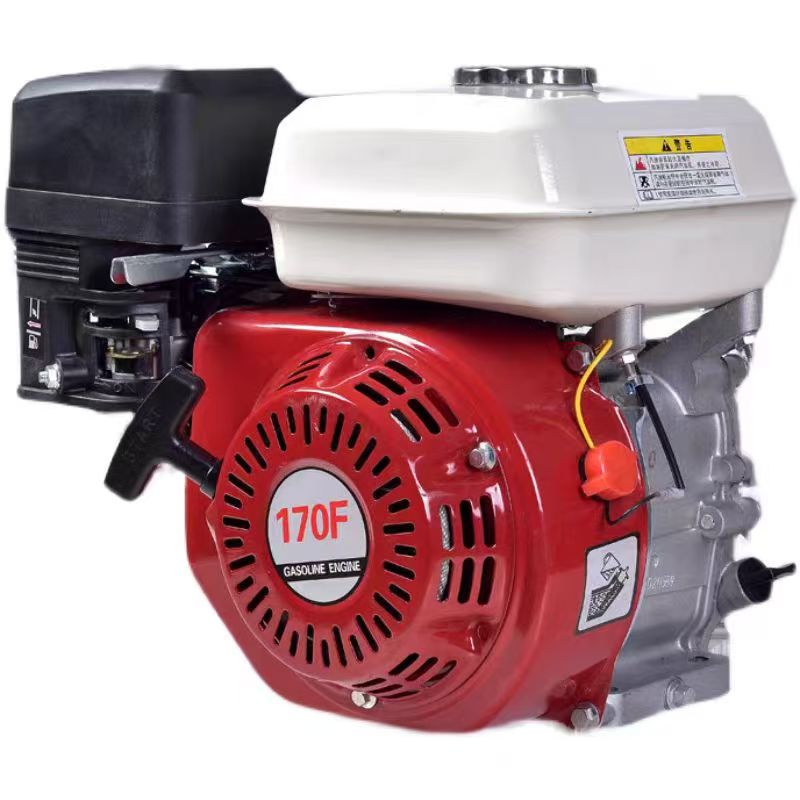
Description
Model 170F is a single-cylinder, four-stroke, forced air-cooled gasoline engine with overhead valve structure. It adopts carburetor fuel supply and spark plug ignition system. Standard recoil hand start, electric starter is optional. Compact size, light weight and low vibration make it widely matched with portable farm equipment such as mini water pumps, small sprayers and light micro tillers. It features stable power output, easy operation and convenient daily maintenance.
Different from diesel engines, it runs smoothly with lower noise and simple starting performance.
Advantages
Four-stroke OHV design, sufficient combustion, low fuel consumption and less exhaust pollution;
Lightweight body, easy to move for field irrigation and spraying work; Standard hand recoil start, optional 12V electric start for one-button startup;
Paper air filter effectively blocks farm dust to extend service life;
Small volume with steady power, perfect for portable water pumps, agricultural sprayers, mini generators and small garden machinery.
It is the ideal power choice for household small farms and outdoor mobile equipment.
Specifications
| Model | Petrol engine 170F |
| Engine Type | Single cylinder, 4-stroke, OHV overhead valve, forced air-cooled, naturally |
| Bore x Stroke | 70 mm × 54 / 55 mm |
| Displacement | 208–212 cc |
| Max.Power | 4.7 kW / 7.5 HP |
| Maximum Torque | 12.5–14 N·m @2500 rpm |
| Compression Ratio | 8.5:1 |
| Rated Speed | 3600 rpm |
| Rated Continuous Power | 4.2 kW / 7.0 HP @3600 rpm |
| Fuel Type | 92# unleaded gasoline |
| Fuel Tank Capacity | 3.6 L |
| Engine Oil Capacity | 0.6 L |
| Lubrication System | Splash lubrication |
| Specific Fuel Consumption | ≤370 g/kW·h |
| Ignition System | CDI / Transistor contactless magneto ignition |
Working Principle of Petrol Engine
Petrol engines are spark-ignition internal combustion engines, mainly operating on a four-stroke cycle: Intake, Compression, Power, Exhaust. Unlike diesel engines, they use gasoline mixed with air and rely on spark plugs for ignition instead of compression self-ignition.
1. Intake Stroke
The intake valve opens and the exhaust valve closes. The piston moves downward. Air and atomized gasoline are mixed in the carburetor and sucked into the cylinder together.
2. Compression Stroke
Both valves close tightly. The piston travels upward to compress the air-fuel mixture. The mixture temperature and pressure rise sharply after compression.
3. Power (Combustion) Stroke
When the piston reaches the top dead center, the spark plug generates an electric spark to ignite the mixed gas. The mixture burns instantly and expands violently, pushing the piston down rapidly. The piston drives the connecting rod and crankshaft to output rotating power for water pumps, tillers and generators.
4. Exhaust Stroke
The exhaust valve opens, and the piston moves upward again. Waste gas from combustion is pushed out through the exhaust pipe. After this stroke, a new cycle starts automatically.
 Messenger
 Whatsapp
 WeChat